Warm feet first: dressing for the Dyker Heights lights
The Dyker Heights lights mean an outdoor evening in a New York December, most of it strolling slowly or standing still. That is colder than it sounds. Below, what the weather tends to do, and the clothes that keep you outside happily for the full hour.
How cold a December night in Brooklyn gets
New York in December sees daytime highs of around 44 °F (7 °C), and the lights only make sense after dark. By the time you reach the lit blocks, the air is often close to freezing, around 32 °F (0 °C).
Wind off the harbor can make it feel colder still, and damp air works its way through thin fabric. Rain and sleet are as likely as snow, so plan for wet weather as much as for cold.
Our guide to the best nights covers how the weather shapes the crowds. Our pick runs rain or shine, so the forecast decides what you wear rather than whether you go.
Why standing still is the problem
An hour among the houses isn't a brisk hike. You walk a few steps and stop for a photo. Then you wait while someone lines up a selfie before moving on, and that slow rhythm lets the cold creep in from the feet up.
The bus ride to Brooklyn is warm, which makes the first minutes outside feel sharper. Dress for the walk rather than the coach, and open a layer on board instead of leaving it at the hotel.
On Scatto a New York's bus tour at ~$63 about an hour of the evening is on foot in Dyker Heights. Roughly 25 minutes more go to Brooklyn Bridge Park, and that waterfront stop can be the windiest part of the night.
Wrapped up? The bus goes either way
Scatto a New York's tour runs rain or shine, with a heated coach between the stops. 4.6 from 2,400+ reviews on GetYourGuide, and free cancellation up to 24 hours before.
Feet first
Cold feet end an evening sooner than anything else. Waterproof boots with a thick sole keep slush and the chill of the pavement away, and on a wet night they matter more than the coat.
Wear wool socks, or a thin liner sock under a thicker wool pair. Cotton holds the sweat from a warm subway car or bus and turns cold once you are standing outside.
Leave brand-new boots at home. An hour on hard sidewalks in stiff footwear means spending the second half of the walk thinking about your heels instead of the houses.
Layers under a windproof coat
Several thin layers keep you warmer than one bulky sweater. Start with a base layer of merino or a synthetic fabric and a fleece or wool sweater on top, with a coat that stops the wind over both.
A coat that reaches below the hips helps at the waterfront stop. Layers also let you open up on the heated bus and close everything again before you step off.
Most of what you need is already in a winter suitcase. The list below covers the evening from the bus door to the last house.
- Waterproof boots with a thick sole
- Wool socks, plus a spare pair if rain is forecast
- A base layer and a warm sweater or fleece
- A windproof coat with a hood, waterproof if possible
- An ear-covering hat with a scarf or neck gaiter
- Touchscreen gloves, or thin gloves under mittens
- Hand warmers and a charged power bank
Gloves that work with a phone
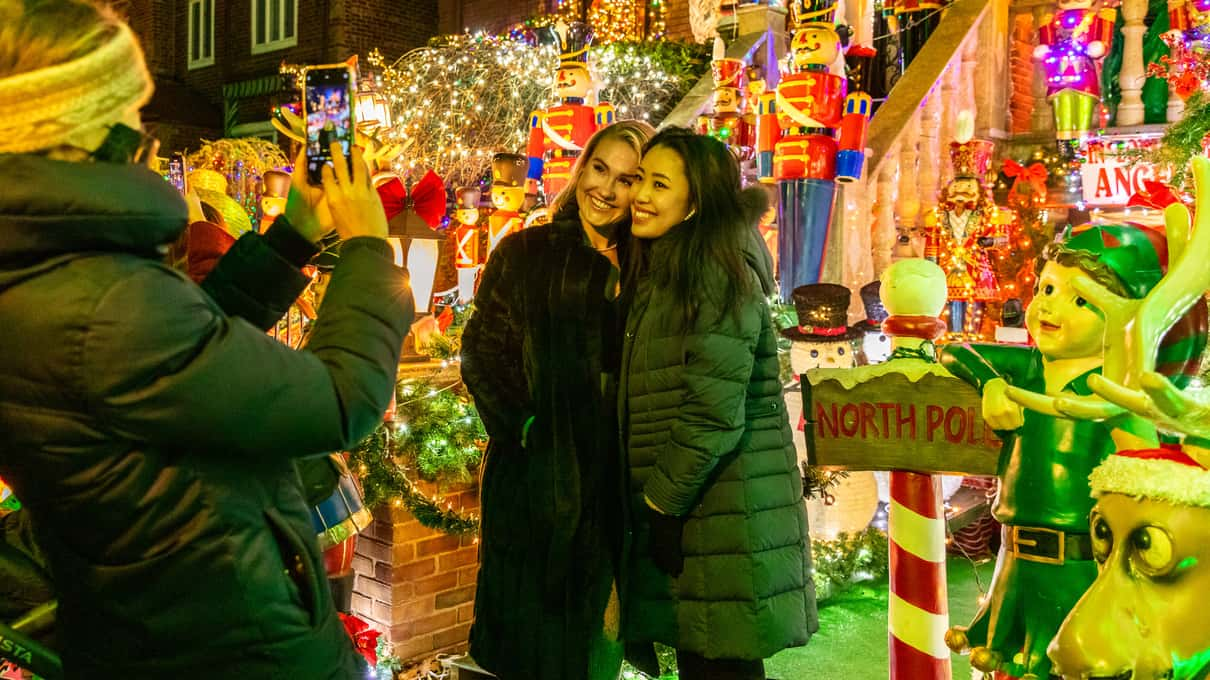
Most people photograph every second house, so gloves come off again and again. Touchscreen gloves solve that, or wear thin liner gloves under mittens and pull the mittens off only for the shot.
A hat over the ears and a scarf or neck gaiter keep the heat in. Disposable hand warmers cost little at a pharmacy and fit in a glove or a coat pocket for the walk.
Cold drains phone batteries fast, and a phone at 20 percent can die within minutes outside. Carry a small power bank, and keep the phone in an inside pocket between photos.
A hood beats an umbrella
On a wet night the sidewalks along 84th Street fill with people, and an open umbrella pokes eyes and blocks everyone's view of the houses. A hood on a waterproof coat keeps you dry without taking up space.
A cap with a brim under the hood keeps rain off your face and your camera lens. If you do carry a small umbrella, fold it whenever the crowd thickens.
Light snow is the kindest weather for photos, since it softens the glare and dusts the figures. Sleet is the worst, and that is the night the waterproof boots earn their place.
What to bring, and what to leave behind
A small backpack or crossbody bag keeps your hands free in the crowds. Food and drink aren't allowed on our pick's bus, so eat before the meeting point and save the hot drink for the Bryant Park winter market where the tour ends.
Leave the big camera bag and the tripod behind, since a crowded sidewalk has no room for either. The neighborhood etiquette guide explains why space on these residential streets is tight.
Dressing children and older relatives
Children lose heat faster and complain later than adults, so put the extra layer on them first. Our guide to the lights with kids covers strollers and bedtimes as well.
For anyone who feels the cold badly, a shorter walk may help more than more clothing. The private limo cuts the time on foot to about 30–40 minutes for ~$959 per group.
Going on your own by subway lets you leave the moment someone gets cold. Our guide to the route by train covers the walk from the station, which adds time outside at each end.